Serving Newark and Essex, Hudson & Union County Replacement and installation only
(973) 788-8324
NNewark RidgeRoofing
Roof Installation

Roof Installation in Orange

A new roof on new work: an addition, a dormer, a converted loft or a building going up from scratch.

01 Orange

Get the detailing right while it is still open.

New work is the one case where the roof can be got right rather than merely made watertight. Ventilation paths, ice barrier coverage and the tie-in to the existing structure are all cheap to do properly while the framing is exposed and expensive to correct afterwards.

Orange

Roof Installation, and what it actually involves

On new work the decisions that cause leaks ten years out are made before the covering is opened. Sequencing with the other trades matters more than the roofing itself.

  • Stripped to the deck, not re-covered over the old roof
  • Deck inspected once exposed, with a stated allowance
  • Scoped against the NJ Uniform Construction Code
  • Newark and the surrounding Essex, Hudson and Union towns
(973) 788-8324
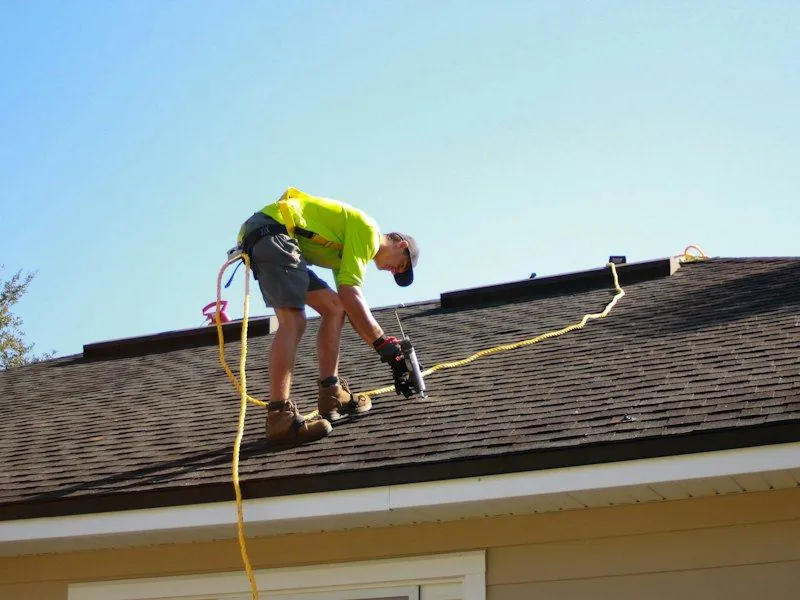
A roofer working on an asphalt shingle slope
Replacement work
01 New work

On a new roof the expensive decisions are made before the covering opens

An addition or a dormer is the one chance to build a roof properly rather than make an existing one watertight. Almost all of it is cheap now and expensive later.

01

Tie-in to the existing roof

Where new framing meets old, the two will move differently. The junction needs a flashing detail designed for that, not a bead of sealant across the joint.

02

Ventilation path planned, not retrofitted

An addition that blocks the original eave intake starves the whole roof of air. This gets designed while the framing is open or it does not get done at all.

03

Ice barrier where the code puts it

From the eave edge to at least 24 inches inside the interior wall line. On a low addition with a shallow pitch that can mean most of the roof.

04

Sequence with the other trades

Dry-in has to happen before the interior work starts, and any penetration — flue, vent, mechanical — wants to be set before the covering rather than cut through it afterwards.

05

Finish the edges properly

Drip edge, rake detail and the gutter line are the parts of new work most often left to the end and rushed. They are also where wind gets under a covering first.

02 Applied to Orange

What changes about this job here

New work on an attached building has to tie into two existing roofs, not one. Both junctions move independently of the new structure, and both need a detail that allows for it.

Orange — attached and multi-family fabric

Very densely built -- over fifteen thousand per square mile on just over two square miles -- in a stock running heavily to two- and three-family houses and small apartment buildings.

Reference point: the city directly west of Newark, between Vailsburg and West Orange.

03 On the ground in Orange

What gets replaced here, and what makes it awkward

Where the difficulty sits

Multi-family at this density means the replacement is nearly always a shared decision and nearly always a constrained site. Both push toward phasing the work rather than doing it in one stretch.

Worth knowing locally

Orange sits in the same density band as Newark's West Ward, and the buildings behave the same way.

34,447
Residents
2.21
Square miles
15,565
Per square mile
12,665
Housing units
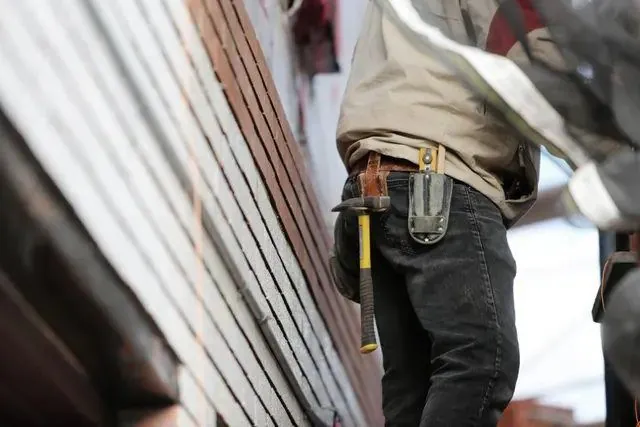
A roofer carrying hand tools across a shingle roof
Orange
Buildings in Orange

What the roofs are like in Orange

Very densely built -- over fifteen thousand per square mile on just over two square miles -- in a stock running heavily to two- and three-family houses and small apartment buildings.

All areas covered
05 The rules that apply

What New Jersey code requires on a replacement

Worth knowing before accepting any quote, because a scope that ignores these is a scope that will change later.

One code, statewide

New Jersey adopts a single Uniform Construction Code and municipalities may not set lesser or greater technical requirements. A correct specification in Newark is correct in Kearny.

Two layers, then tear off

No more than two applications of covering may remain on a structure. A third means a full strip, whatever the quote assumed.

The 25% permit threshold

Replacing more than a quarter of a roof surface within any twelve months requires a construction permit. Splitting one job in two inside that window does not avoid it.

Ice barrier at the eaves

Required in this design zone, running from the eave edge to at least 24 inches inside the interior wall line.

Who enforces it here

In Newark the code is enforced by the city's Department of Engineering, Division of Construction Code Enforcement, which is where permits for qualifying work are issued.

Inspection before cover-up

Where a permit applies, the work is inspected at stages. A programme that ignores inspection windows is a programme that will slip.

Nearby & related

Installation work close to Orange

The same job in the areas next door, and the other work we take on in this one.

See every area we do roof installation in across Newark →

Questions

Common questions

General guidance about how these buildings are re-roofed, not a survey of any particular property.

What is different about roofing new work rather than replacing?

Everything that causes leaks in ten years is decided before the covering is opened: the tie-in to the existing structure, the ventilation path and the ice barrier coverage. All are cheap while the framing is exposed and expensive afterwards.

What happens where the roof meets the building next door?

It gets terminated and flashed as a detail in its own right. On attached buildings that junction is the single most likely place for a new roof to leak, and a failure there shows up in the neighbouring property rather than your own.

Will this need a permit?

Replacing more than a quarter of a roof surface within any twelve months requires a construction permit under the New Jersey Uniform Construction Code. A full replacement is over that threshold, so yes — and the work is inspected at stages.

Thinking about a replacement in Orange?

Tell us what the building is and roughly how old the roof is. That is usually enough to say what the job involves before anyone goes up.

Call (973) 788-8324