Serving Newark and Essex, Hudson & Union County Replacement and installation only
(973) 788-8324
NNewark RidgeRoofing
Roof Replacement

Roof Replacement in Downtown Newark

A full tear-off and a new roof system, specified for the building it is going on rather than to whatever is cheapest on the van.

01 Downtown

Tear off, look at the deck, then build.

The part of a replacement that decides how long it lasts happens in the hour after the old covering comes off, when the deck is visible for the first time in decades. Everything before that is logistics and everything after it is installation; that hour is the only chance to find out what is actually being roofed over.

Downtown

Roof Replacement, and what it actually involves

A replacement is not a covering swap. It is a system -- deck, underlayment, ice barrier, flashings, ventilation and covering -- and the covering is the part that matters least.

  • Stripped to the deck, not re-covered over the old roof
  • Deck inspected once exposed, with a stated allowance
  • Scoped against the NJ Uniform Construction Code
  • Newark and the surrounding Essex, Hudson and Union towns
(973) 788-8324
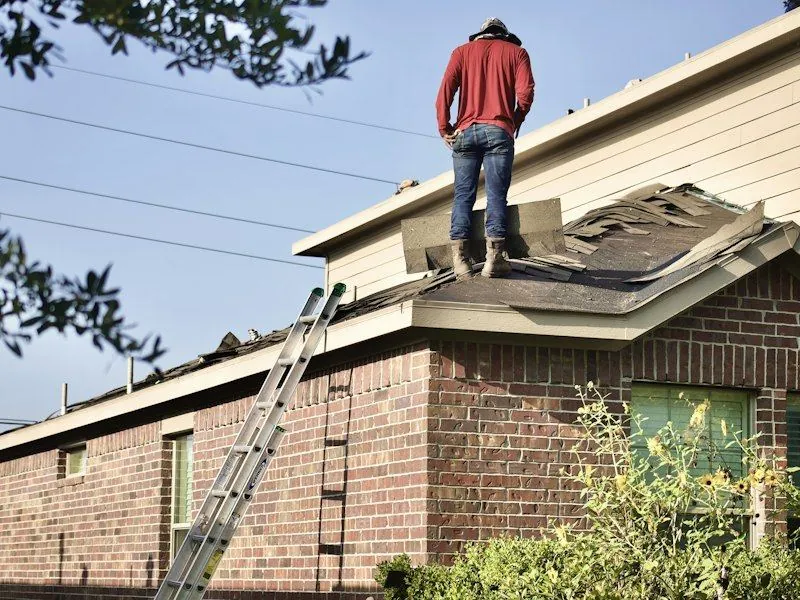
An old roof covering being stripped back to the deck
Replacement work
01 How a replacement runs

The hour after the covering comes off decides the next thirty years

Everything before that hour is logistics. Everything after it is installation. That hour is the only time anyone sees what is actually being roofed over.

01

Establish what is up there first

How many layers, what the covering is, and what the building has had done to it. The layer count alone can decide whether a tear-off is optional or mandatory.

02

Strip to the deck

Not to the previous covering. A new system laid over an old one inherits every defect underneath it and hides the evidence of them at the same time.

03

Inspect and repair the deck

Soft, delaminated or rotted sheathing is replaced now, while it is reachable. This is the single most common reason an honest quote carries a stated allowance rather than one flat number.

04

Build the system, not just the covering

Ice barrier at the eaves, underlayment, valley and penetration flashings, edge metal, then the covering. Most premature failures are a flashing detail, not a shingle.

05

Ventilation before the last course

Intake at the eaves and exhaust at the ridge, balanced. A sealed roof deck with no path for air cooks the covering from underneath and shortens its life regardless of what it cost.

02 Applied to Downtown

What changes about this job here

On a large single-span roof the work is phased by definition — no one strips the whole thing. What can be opened is set by what can be made watertight the same day, and that governs the programme far more than the area does.

Downtown Newark — large single-span roofs

The commercial core: mid- and high-rise buildings, civic and institutional blocks, and continuous street-wall frontages with low-slope roofs behind parapets.

Reference point: the Central Business District around Penn Station, the Prudential Center, NJPAC and Military Park.

03 On the ground in Downtown Newark

What gets replaced here, and what makes it awkward

Where the difficulty sits

Almost nothing downtown is a pitched roof. These are low-slope systems on occupied commercial buildings, which means a replacement is phased so the space underneath stays dry and open while the old covering is off.

Worth knowing locally

Access is by lift or crane rather than ladder, and that constraint usually sets the programme before any roofing decision does.

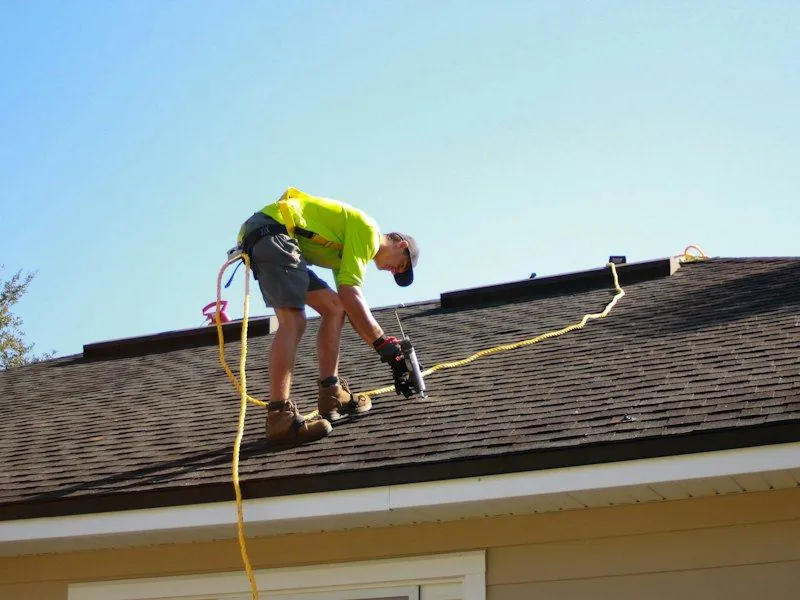
A roofer working on an asphalt shingle slope
Downtown
Buildings in Downtown

What the roofs are like in Downtown

The commercial core: mid- and high-rise buildings, civic and institutional blocks, and continuous street-wall frontages with low-slope roofs behind parapets.

All areas covered
05 The rules that apply

What New Jersey code requires on a replacement

Worth knowing before accepting any quote, because a scope that ignores these is a scope that will change later.

One code, statewide

New Jersey adopts a single Uniform Construction Code and municipalities may not set lesser or greater technical requirements. A correct specification in Newark is correct in Kearny.

Two layers, then tear off

No more than two applications of covering may remain on a structure. A third means a full strip, whatever the quote assumed.

The 25% permit threshold

Replacing more than a quarter of a roof surface within any twelve months requires a construction permit. Splitting one job in two inside that window does not avoid it.

Ice barrier at the eaves

Required in this design zone, running from the eave edge to at least 24 inches inside the interior wall line.

Who enforces it here

In Newark the code is enforced by the city's Department of Engineering, Division of Construction Code Enforcement, which is where permits for qualifying work are issued.

Inspection before cover-up

Where a permit applies, the work is inspected at stages. A programme that ignores inspection windows is a programme that will slip.

Nearby & related

Replacement work close to Downtown

The same job in the areas next door, and the other work we take on in this one.

See every area we do roof replacement in across Newark →

Questions

Common questions

General guidance about how these buildings are re-roofed, not a survey of any particular property.

Why tear off rather than re-cover in Downtown Newark?

Because a covering laid over an old one inherits every defect beneath it and hides the evidence at the same time. It also uses up the second of the two layers New Jersey permits, so the next replacement is a mandatory strip regardless.

Does the building have to close during the work?

No. Large single-span roofs are phased so that whatever is stripped can be made watertight the same day, and the space underneath stays in use throughout.

Will this need a permit?

Replacing more than a quarter of a roof surface within any twelve months requires a construction permit under the New Jersey Uniform Construction Code. A full replacement is over that threshold, so yes — and the work is inspected at stages.

Thinking about a replacement in Downtown?

Tell us what the building is and roughly how old the roof is. That is usually enough to say what the job involves before anyone goes up.

Call (973) 788-8324