Serving Newark and Essex, Hudson & Union County Replacement and installation only
(973) 788-8324
NNewark RidgeRoofing
Newark, New Jersey

Roof Replacement in Newark, NJ

Stripped to the deck, then built as a system. Not a new covering laid over whatever is already up there.

  • Tear-off as standard. The deck gets looked at before anything new goes on — it is the only chance to.
  • A written scope with a stated deck allowance. So the number does not move once the covering is off.
  • Permit and inspections handled. A full replacement is over the 25% threshold, so it is permitted, inspected work.
  • Specified for the building. A rowhouse, a detached house and a low-slope commercial roof are three different jobs.
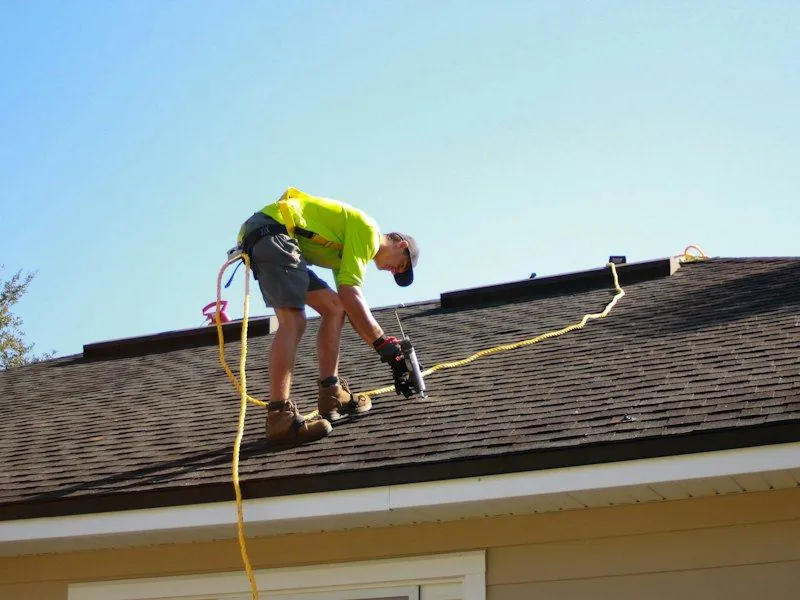
A roofer in a harness working on an asphalt shingle roof
24 areas coveredEssex · Hudson · Union
Replacement, not patchingTear-off to the deck as standard
Built for this stockRowhouse, detached, multi-family, single-span
NJ code, correctly appliedUniform Construction Code, statewide
Five wards and beyondEssex, Hudson and Union County towns
Newark Ridge Roofing

A roof is a system. The covering is the part that matters least.

Deck, ice barrier, underlayment, flashings, edge metal, ventilation, then the covering. Most roofs that fail early fail at a detail, not at the shingle — which is why a quote that only talks about the covering is a quote about a fraction of the job.

  • Tear-off to the deck as standard
  • Rowhouse, detached, multi-family and single-span
  • The five wards and the towns around them
  • NJ Uniform Construction Code, correctly applied
(973) 788-8324
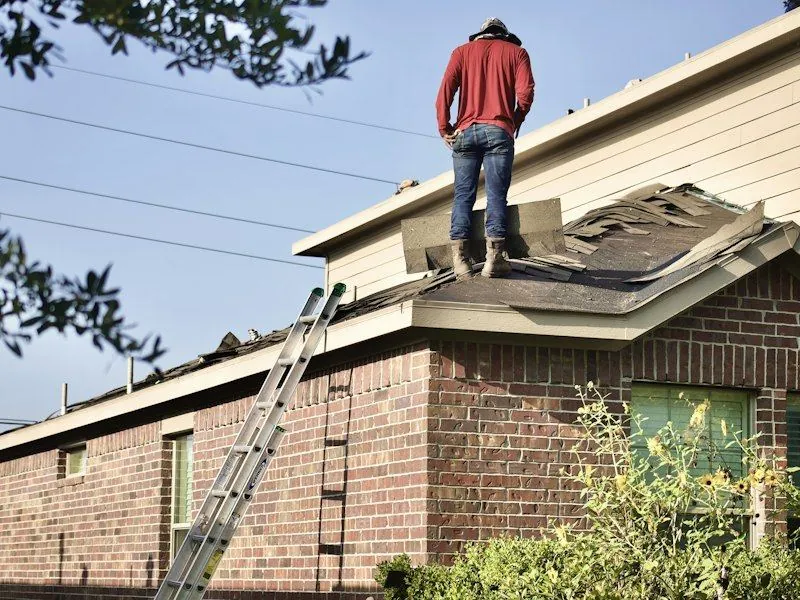
An old roof covering being stripped back to the deck
Tear-off
01 What we take on

Six kinds of replacement, six different jobs

They share a trade and very little else. Which one it is decides the programme, the specification and the price.

Roof Replacement

A full tear-off and a new roof system, specified for the building it is going on rather than to whatever is cheapest on the van.

Roof Installation

A new roof on new work: an addition, a dormer, a converted loft or a building going up from scratch.

Flat Roof Replacement

Low-slope systems replaced with the falls corrected, not just the membrane renewed over the same standing water.

Shingle Roof Replacement

Asphalt shingle roofs stripped and rebuilt, with the layer count established before the quote rather than discovered during it.

Storm Damage Roof Replacement

Replacement after a specific weather event, documented while the evidence is still on the roof.

Multi-Family Roof Replacement

Two-, three- and multi-family buildings, where one roof is a shared decision and a tenanted building has to keep working throughout.

01 How a replacement runs

The hour after the covering comes off decides the next thirty years

Everything before that hour is logistics. Everything after it is installation. That hour is the only time anyone sees what is actually being roofed over.

01

Establish what is up there first

How many layers, what the covering is, and what the building has had done to it. The layer count alone can decide whether a tear-off is optional or mandatory.

02

Strip to the deck

Not to the previous covering. A new system laid over an old one inherits every defect underneath it and hides the evidence of them at the same time.

03

Inspect and repair the deck

Soft, delaminated or rotted sheathing is replaced now, while it is reachable. This is the single most common reason an honest quote carries a stated allowance rather than one flat number.

04

Build the system, not just the covering

Ice barrier at the eaves, underlayment, valley and penetration flashings, edge metal, then the covering. Most premature failures are a flashing detail, not a shingle.

05

Ventilation before the last course

Intake at the eaves and exhaust at the ridge, balanced. A sealed roof deck with no path for air cooks the covering from underneath and shortens its life regardless of what it cost.

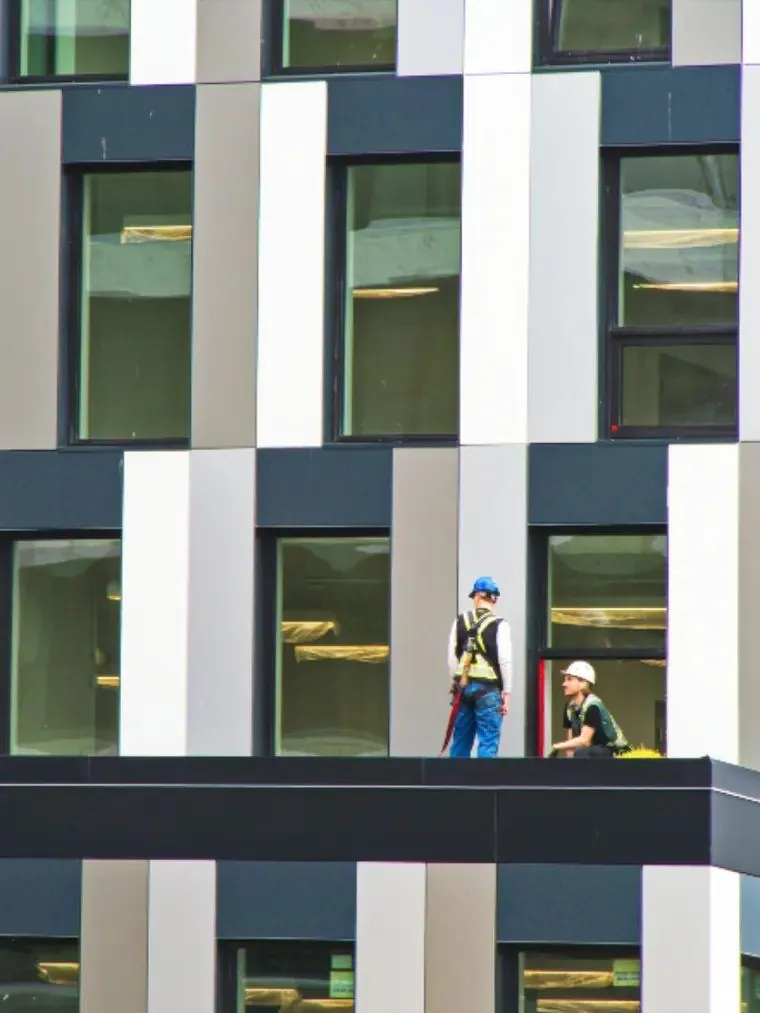
Two workers on a low-slope roof behind a parapet wall
Low-slope work
Newark, New Jersey

Five wards, four kinds of building

Newark is the largest city in New Jersey — 311,549 people across 24.14 square miles of land in 108,907 housing units. What that covers is genuinely different from one ward to the next: rowhouses shoulder to shoulder in the Ironbound, mansions on generous lots in Forest Hill, low-slope commercial behind parapets downtown, and two- and three-family blocks through the West and North Wards.

A replacement is specified for which of those it is, not for the city as a whole.

How we work
05 The rules that apply

What New Jersey code requires on a replacement

Worth knowing before accepting any quote, because a scope that ignores these is a scope that will change later.

One code, statewide

New Jersey adopts a single Uniform Construction Code and municipalities may not set lesser or greater technical requirements. A correct specification in Newark is correct in Kearny.

Two layers, then tear off

No more than two applications of covering may remain on a structure. A third means a full strip, whatever the quote assumed.

The 25% permit threshold

Replacing more than a quarter of a roof surface within any twelve months requires a construction permit. Splitting one job in two inside that window does not avoid it.

Ice barrier at the eaves

Required in this design zone, running from the eave edge to at least 24 inches inside the interior wall line.

Who enforces it here

In Newark the code is enforced by the city's Department of Engineering, Division of Construction Code Enforcement, which is where permits for qualifying work are issued.

Inspection before cover-up

Where a permit applies, the work is inspected at stages. A programme that ignores inspection windows is a programme that will slip.

05 Local conditions

What this climate does to a new roof

Newark sits in a humid subtropical shading into humid continental (Koppen Cfa/Dfa) zone with a full freeze-thaw winter — the combination hardest on flashings, fixings and mortar.

Freeze-thaw finds every gap

Water that gets into a lap, a joint or a hairline crack and then freezes expands. Northern New Jersey cycles through that repeatedly each winter, so small defects do not stay small.

Meltwater behaves unlike rain

Melt moves slowly under a snow layer and refreezes at the cold eave, backing water up under the covering where pitch does not help. That is what the ice barrier exists for.

Driven rain arrives at an angle

Rain coming in sideways gets under laps that shed vertical rain perfectly well, which is why edge and flashing detail matters more than the covering specification.

06 Coverage

Newark, and the Essex, Hudson and Union towns around it

The five wards, plus the municipalities on every side — west into the Oranges, north into Belleville and Nutley, east across the Passaic River, and south into Union County.

Questions

Common questions

General guidance about how these buildings are re-roofed, not a survey of any particular property.

Do you re-cover roofs or always tear off?

Tear off, as standard. A covering laid over an old one inherits every defect underneath it, hides the evidence, and uses up the second of the two layers New Jersey permits on a structure.

How many layers of roofing does New Jersey allow?

Two. Where two applications of covering are already on a structure a third is not available, so the tear-off is required rather than a preference.

Will a roof replacement in Newark need a permit?

Yes. Replacing more than a quarter of a roof surface within twelve months requires a construction permit under the New Jersey Uniform Construction Code, and a full replacement is well over that. In Newark it is issued through the city's Department of Engineering, Division of Construction Code Enforcement.

Which areas do you cover?

Newark itself — the Ironbound, Forest Hill, Downtown, Weequahic, University Heights, Vailsburg, Roseville and Lincoln Park — plus Irvington, Belleville, Harrison, East Newark, Kearny, Hillside, Maplewood, South Orange, Orange, West Orange, Nutley, Roselle, Linden, Jersey City and Bayonne.

Why does the quote carry an allowance rather than one flat number?

Because nobody can see the deck until the covering is off. Soft or rotted sheathing is replaced while it is reachable, and an honest quote states what that allowance covers instead of pretending the deck is fine.

Planning a roof replacement?

Tell us what the building is and roughly how old the roof is.

Call (973) 788-8324