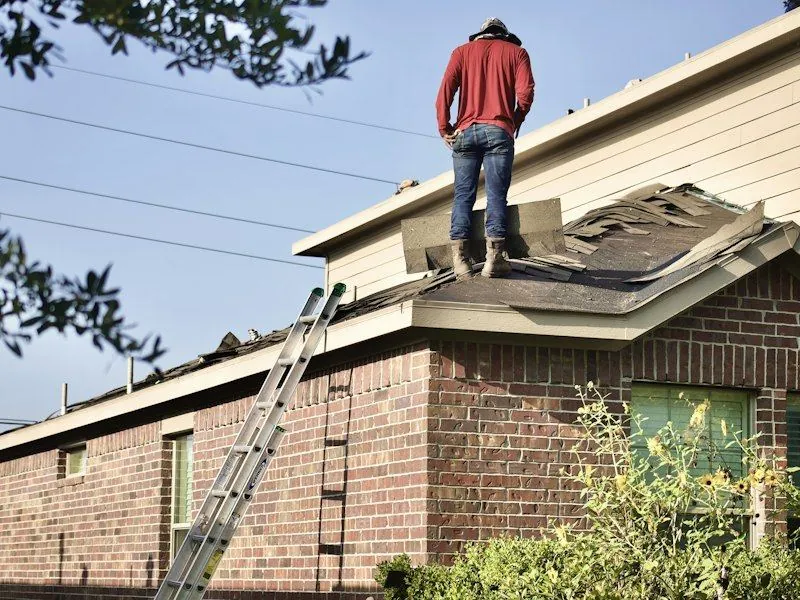
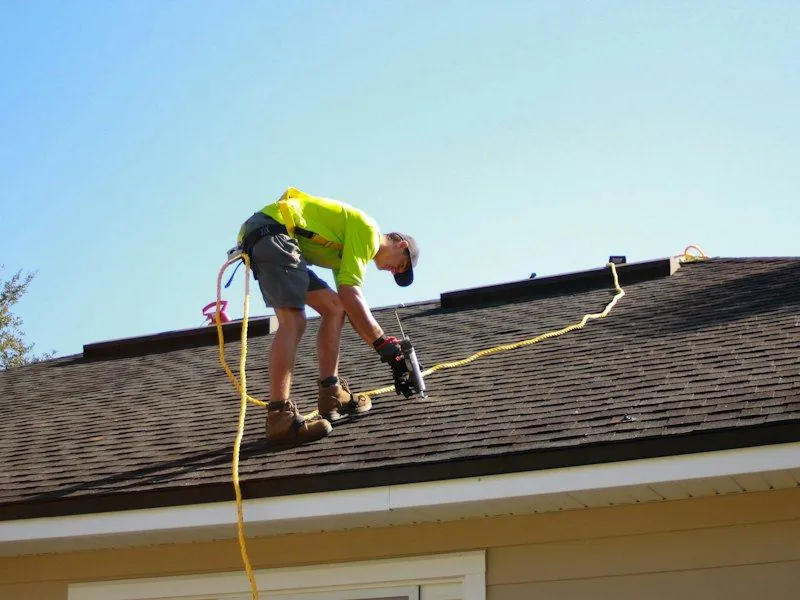
A full tear-off and a new roof system, specified for the building it is going on rather than to whatever is cheapest on the van.
The part of a replacement that decides how long it lasts happens in the hour after the old covering comes off, when the deck is visible for the first time in decades. Everything before that is logistics and everything after it is installation; that hour is the only chance to find out what is actually being roofed over.
A replacement is not a covering swap. It is a system -- deck, underlayment, ice barrier, flashings, ventilation and covering -- and the covering is the part that matters least.
Everything before that hour is logistics. Everything after it is installation. That hour is the only time anyone sees what is actually being roofed over.
How many layers, what the covering is, and what the building has had done to it. The layer count alone can decide whether a tear-off is optional or mandatory.
Not to the previous covering. A new system laid over an old one inherits every defect underneath it and hides the evidence of them at the same time.
Soft, delaminated or rotted sheathing is replaced now, while it is reachable. This is the single most common reason an honest quote carries a stated allowance rather than one flat number.
Ice barrier at the eaves, underlayment, valley and penetration flashings, edge metal, then the covering. Most premature failures are a flashing detail, not a shingle.
Intake at the eaves and exhaust at the ridge, balanced. A sealed roof deck with no path for air cooks the covering from underneath and shortens its life regardless of what it cost.
On attached buildings the tear-off stops at a wall that belongs to somebody else. The termination against the neighbouring roof has to be detailed and flashed as carefully as anything in the middle, because a failure there leaks next door rather than into the building that paid for the work.
Densely built on under six square miles, with a stock weighted heavily toward two- and three-family houses set close together on a regular street grid.
Reference point: the peninsula city between Newark Bay and New York Bay.
Exposure is what separates Bayonne from the inland towns. Water on three sides means sustained wind at the roof edge, and uplift at eaves and rakes drives both the failure and the fixing specification for the replacement.
Edge and perimeter fixing should be specified up rather than to the minimum on a site this exposed.
Densely built on under six square miles, with a stock weighted heavily toward two- and three-family houses set close together on a regular street grid.
All areas coveredNewark sits in a humid subtropical shading into humid continental (Koppen Cfa/Dfa) zone with a full freeze-thaw winter — the combination hardest on flashings, fixings and mortar.
Water that gets into a lap, a joint or a hairline crack and then freezes expands. Northern New Jersey cycles through that repeatedly each winter, so small defects do not stay small.
Melt moves slowly under a snow layer and refreezes at the cold eave, backing water up under the covering where pitch does not help. That is what the ice barrier exists for.
Rain coming in sideways gets under laps that shed vertical rain perfectly well, which is why edge and flashing detail matters more than the covering specification.
The same job in the areas next door, and the other work we take on in this one.
General guidance about how these buildings are re-roofed, not a survey of any particular property.
Because a covering laid over an old one inherits every defect beneath it and hides the evidence at the same time. It also uses up the second of the two layers New Jersey permits, so the next replacement is a mandatory strip regardless.
It gets terminated and flashed as a detail in its own right. On attached buildings that junction is the single most likely place for a new roof to leak, and a failure there shows up in the neighbouring property rather than your own.
Replacing more than a quarter of a roof surface within any twelve months requires a construction permit under the New Jersey Uniform Construction Code. A full replacement is over that threshold, so yes — and the work is inspected at stages.
Tell us what the building is and roughly how old the roof is. That is usually enough to say what the job involves before anyone goes up.