Serving Newark and Essex, Hudson & Union County Replacement and installation only
(973) 788-8324
NNewark RidgeRoofing
Multi-Family Roof Replacement

Multi-Family Roof Replacement in University Heights

Two-, three- and multi-family buildings, where one roof is a shared decision and a tenanted building has to keep working throughout.

01 University Heights

One roof, several households, one plan.

On a multi-family building the roofing is rarely the hard part. Agreeing the scope between owners, giving tenants notice, keeping the top floor habitable during tear-off and staging materials on a site with no off-street space are what actually decide whether the job runs to programme.

University Heights

Multi-Family Roof Replacement, and what it actually involves

The technical work is the same as a house. The coordination is not, and it is what the programme should be built around.

  • Stripped to the deck, not re-covered over the old roof
  • Deck inspected once exposed, with a stated allowance
  • Scoped against the NJ Uniform Construction Code
  • Newark and the surrounding Essex, Hudson and Union towns
(973) 788-8324
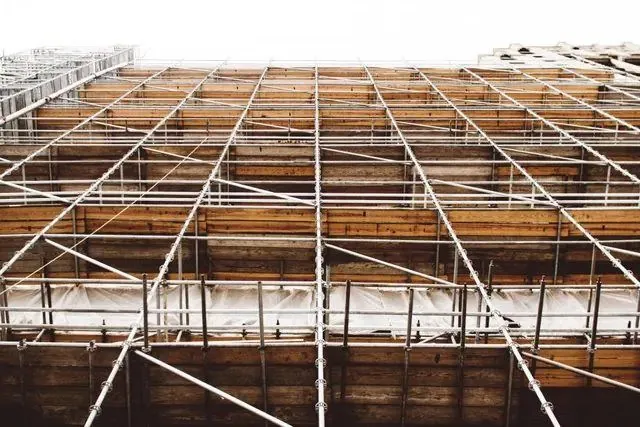
Scaffolding set up against a building
Replacement work
01 Two-, three- and multi-family

The roofing is the easy part on a shared building

One roof, several households and a building that has to keep working while the covering is off. That is what decides the programme.

Agreeing the scope takes longest

Where a roof is shared, the decision is shared. The technical answer is usually settled long before everyone has agreed what is being paid for.

The top floor takes the disruption

Tear-off is loud, dusty and directly overhead. Tenants on the top floor need notice and a realistic picture of which days are worst.

Nowhere to put anything

On a dense street with no off-street space, materials and waste have to arrive and leave on the day they are needed. That caps how much roof can be open at once.

Never more open than can be closed

On an occupied building the rule is that whatever is stripped can be made watertight the same day, whatever the forecast says in the morning.

Rear additions complicate the scope

Most multi-family buildings here carry a lower rear addition at a shallower pitch, which often needs a different covering from the main slope and should be priced as its own element.

One scope, written down

Where several parties are paying, the thing that prevents a dispute is a written scope that says what is included and what the deck allowance covers.

02 Applied to University Heights

What changes about this job here

Larger residential blocks behave like commercial buildings. The roof is a low-slope system, access is by lift, and the work is phased around keeping the building occupied.

University Heights — large single-span roofs

A mix of institutional buildings, student and staff housing, and older residential blocks that predate the campuses around them.

Reference point: the campuses of Rutgers University-Newark and NJIT.

03 On the ground in University Heights

What gets replaced here, and what makes it awkward

Where the difficulty sits

Institutional roofs and the houses beside them fail on completely different timescales and to different standards. On the institutional side the question is usually the specification and the warranty; on the residential side it is the age of the covering.

Worth knowing locally

Work near a campus is constrained by term dates far more than by weather, and a replacement is usually scheduled around them.

Two workers on a low-slope roof behind a parapet
University Heights
Buildings in University Heights

What the roofs are like in University Heights

A mix of institutional buildings, student and staff housing, and older residential blocks that predate the campuses around them.

All areas covered
05 Local conditions

What this climate does to a new roof

Newark sits in a humid subtropical shading into humid continental (Koppen Cfa/Dfa) zone with a full freeze-thaw winter — the combination hardest on flashings, fixings and mortar.

Freeze-thaw finds every gap

Water that gets into a lap, a joint or a hairline crack and then freezes expands. Northern New Jersey cycles through that repeatedly each winter, so small defects do not stay small.

Meltwater behaves unlike rain

Melt moves slowly under a snow layer and refreezes at the cold eave, backing water up under the covering where pitch does not help. That is what the ice barrier exists for.

Driven rain arrives at an angle

Rain coming in sideways gets under laps that shed vertical rain perfectly well, which is why edge and flashing detail matters more than the covering specification.

Nearby & related

Multi-Family work close to University Heights

The same job in the areas next door, and the other work we take on in this one.

See every area we do multi-family roof replacement in across Newark →

Questions

Common questions

General guidance about how these buildings are re-roofed, not a survey of any particular property.

Who decides on a shared roof?

Everyone who owns part of it, which is why the scope takes longer to agree than the roof takes to fit. A written scope stating what is included and what the deck allowance covers is what prevents a dispute later.

Does the building have to close during the work?

No. Large single-span roofs are phased so that whatever is stripped can be made watertight the same day, and the space underneath stays in use throughout.

Will this need a permit?

Replacing more than a quarter of a roof surface within any twelve months requires a construction permit under the New Jersey Uniform Construction Code. A full replacement is over that threshold, so yes — and the work is inspected at stages.

Thinking about a replacement in University Heights?

Tell us what the building is and roughly how old the roof is. That is usually enough to say what the job involves before anyone goes up.

Call (973) 788-8324