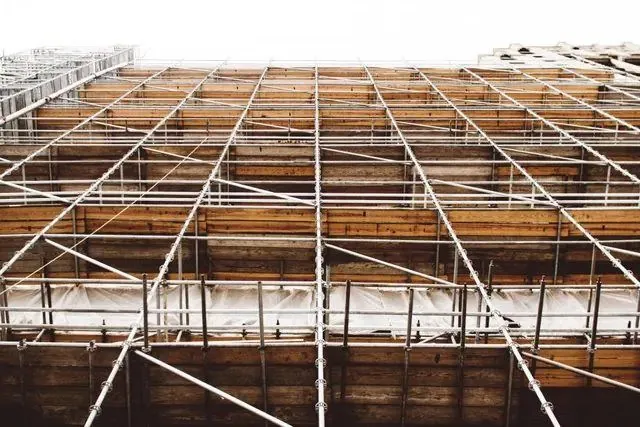
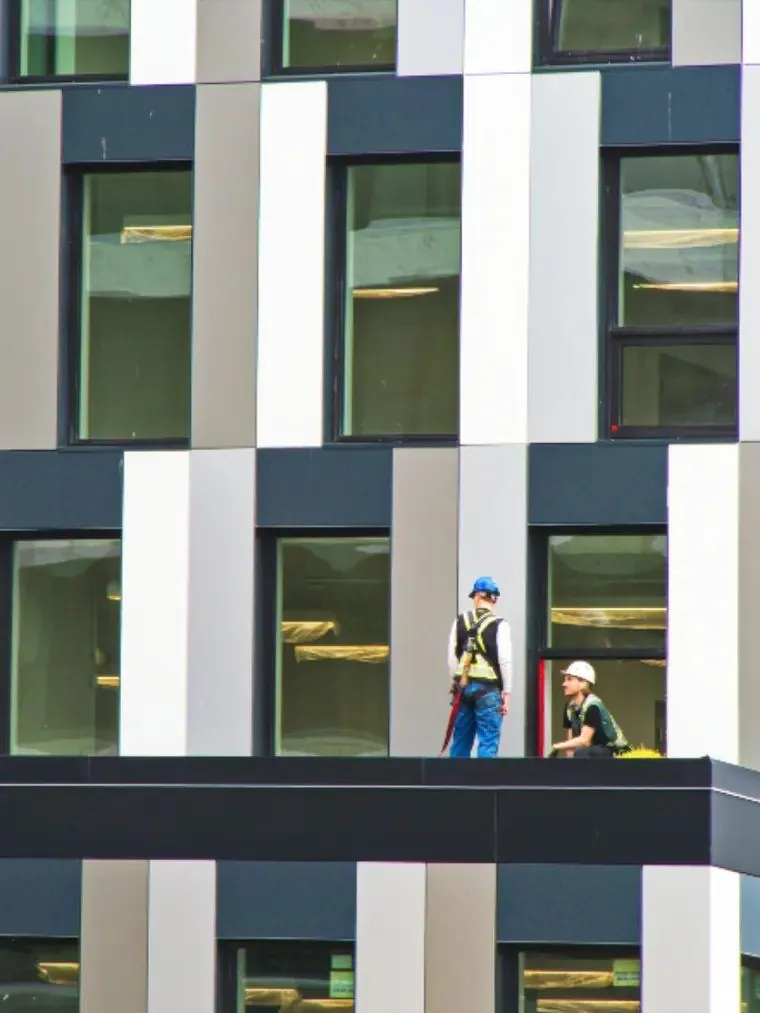
Two-, three- and multi-family buildings, where one roof is a shared decision and a tenanted building has to keep working throughout.
On a multi-family building the roofing is rarely the hard part. Agreeing the scope between owners, giving tenants notice, keeping the top floor habitable during tear-off and staging materials on a site with no off-street space are what actually decide whether the job runs to programme.
The technical work is the same as a house. The coordination is not, and it is what the programme should be built around.
One roof, several households and a building that has to keep working while the covering is off. That is what decides the programme.
Where a roof is shared, the decision is shared. The technical answer is usually settled long before everyone has agreed what is being paid for.
Tear-off is loud, dusty and directly overhead. Tenants on the top floor need notice and a realistic picture of which days are worst.
On a dense street with no off-street space, materials and waste have to arrive and leave on the day they are needed. That caps how much roof can be open at once.
On an occupied building the rule is that whatever is stripped can be made watertight the same day, whatever the forecast says in the morning.
Most multi-family buildings here carry a lower rear addition at a shallower pitch, which often needs a different covering from the main slope and should be priced as its own element.
Where several parties are paying, the thing that prevents a dispute is a written scope that says what is included and what the deck allowance covers.
Mixed-type streets mean the building next door is not a guide. Each multi-family property needs its own scope rather than a figure carried over from a similar-looking address.
One of Newark's oldest built-up areas: nineteenth-century townhouses and civic buildings around the park, a good deal of it historically significant.
Reference point: the historic square at the southern end of Broad Street.
Roofs of this age have usually been re-covered more than once, and under the current covering there may be two earlier ones. New Jersey allows no more than two layers on a structure, so a third application means a full tear-off whatever the budget said.
On a building this old the deck itself is the unknown. It cannot be assessed properly until the coverings are off, which is why an honest quote carries a stated allowance for deck repair.
One of Newark's oldest built-up areas: nineteenth-century townhouses and civic buildings around the park, a good deal of it historically significant.
All areas coveredWorth knowing before accepting any quote, because a scope that ignores these is a scope that will change later.
New Jersey adopts a single Uniform Construction Code and municipalities may not set lesser or greater technical requirements. A correct specification in Newark is correct in Kearny.
No more than two applications of covering may remain on a structure. A third means a full strip, whatever the quote assumed.
Replacing more than a quarter of a roof surface within any twelve months requires a construction permit. Splitting one job in two inside that window does not avoid it.
Required in this design zone, running from the eave edge to at least 24 inches inside the interior wall line.
In Newark the code is enforced by the city's Department of Engineering, Division of Construction Code Enforcement, which is where permits for qualifying work are issued.
Where a permit applies, the work is inspected at stages. A programme that ignores inspection windows is a programme that will slip.
The same job in the areas next door, and the other work we take on in this one.
See every area we do multi-family roof replacement in across Newark →
General guidance about how these buildings are re-roofed, not a survey of any particular property.
Everyone who owns part of it, which is why the scope takes longer to agree than the roof takes to fit. A written scope stating what is included and what the deck allowance covers is what prevents a dispute later.
Because the era does. On mixed streets two addresses a block apart can have different deck construction, different layer counts and different ventilation, and those decide the price far more than the roof area does.
Replacing more than a quarter of a roof surface within any twelve months requires a construction permit under the New Jersey Uniform Construction Code. A full replacement is over that threshold, so yes — and the work is inspected at stages.
Tell us what the building is and roughly how old the roof is. That is usually enough to say what the job involves before anyone goes up.